AI SEO vs Traditional SEO: What Businesses Need to Know in 2026

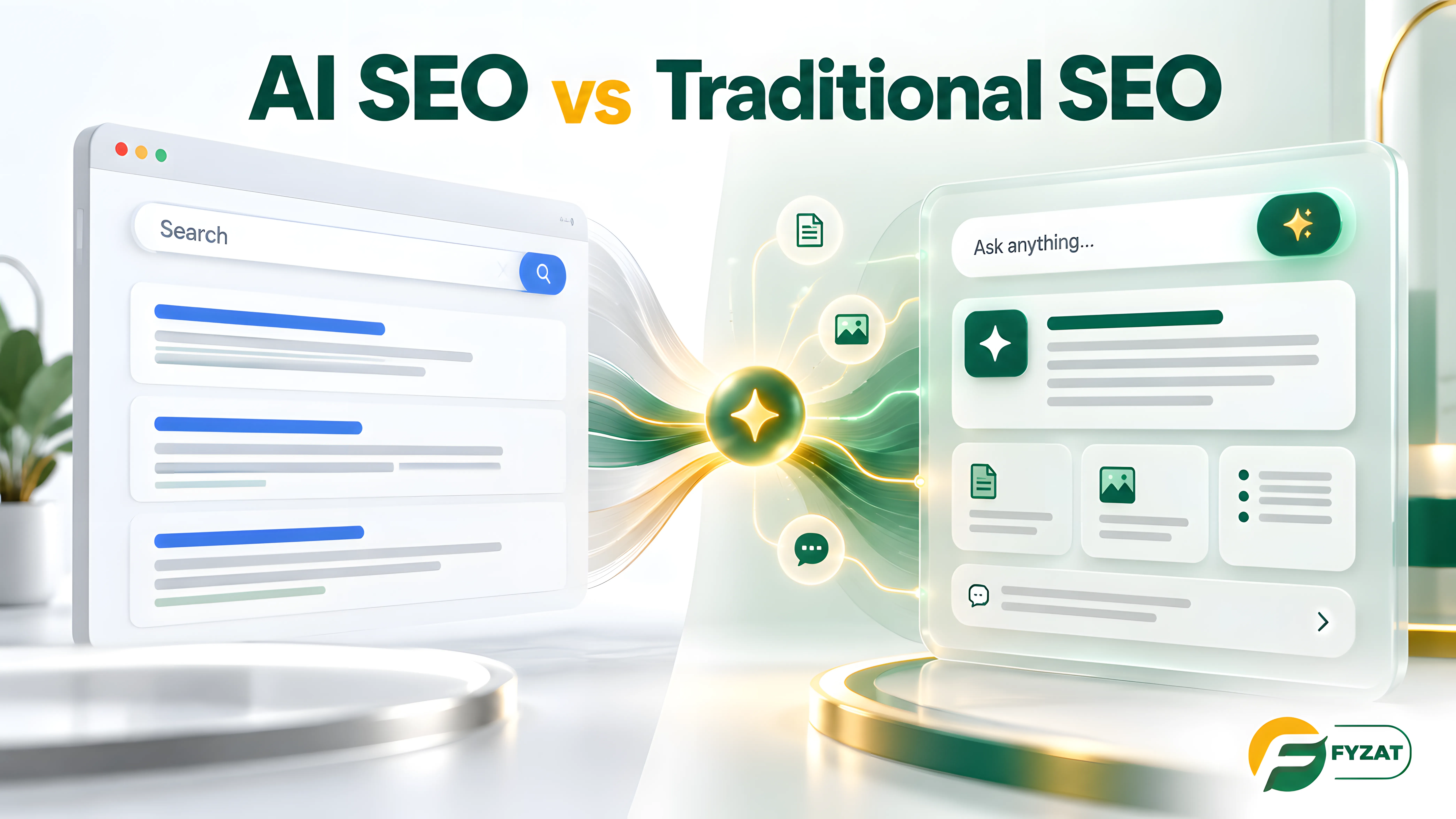
Comparison between traditional search results and AI-powered search for Fyzat
Home / SEO / AI SEO vs Traditional SEO: What Businesses Need to Know in 2026

AI SEO vs Traditional SEO: What Businesses Need to Know in 2026
Updated Aug 12, 2026
11 min read
SEO
Comparison between traditional search results and AI-powered search for Fyzat

Search now includes traditional results, AI Overviews, AI Mode, and other AI-powered experiences. This makes AI SEO vs Traditional SEO important for businesses in 2026. AI SEO does not replace SEO fundamentals. It builds on helpful content, technical accessibility, authority, internal links, and user experience to support modern search behaviour.

Quick answer

This guide explains how AI SEO and traditional SEO work together in 2026. It covers the SEO foundations that still matter, how AI-powered search is changing discovery, and which new practices businesses should adopt. Readers will also learn common AI SEO myths, practical optimisation steps, and how to prepare their websites for future search experiences.

What Is Traditional SEO?

Traditional SEO is the process of improving a website so search engines can find, understand, index, and display its pages in organic search results.

It usually includes the following areas.

Keyword Research:

Keyword research identifies the words, questions, and topics people use when searching for products, services, or information. It helps a business understand what its audience wants and how they describe their needs.

On-Page SEO:

On-page SEO improves elements such as page titles, headings, written content, images, URLs, and internal links. The goal is to make each page clear and useful for both visitors and search engines.

Technical SEO:

Technical SEO helps search engines crawl, render, and index a website. It covers areas such as site structure, mobile usability, page speed, Core Web Vitals, redirects, canonical tags, structured data, and JavaScript-related problems.

Content SEO:

Content SEO involves creating and improving pages that answer real questions and match search intent. This may include service pages, product pages, guides, comparisons, case studies, and blog articles.

Off-Page SEO:

Off-page SEO builds trust and authority beyond the website. Relevant backlinks, digital PR, genuine business mentions, partnerships, and industry recognition can all support a site’s reputation.

Local SEO:

Local SEO helps businesses appear in location-based searches. It includes accurate business information, location pages, reviews, local links, and an updated Google Business Profile.

These foundations remain important in 2026. Google continues to recommend helpful, reliable, people-first content and technically accessible pages.

What Is AI SEO?

AI SEO is the process of adapting an SEO strategy for search experiences that use generative AI and conversational technology.

It may support visibility in:

  • Google AI Overviews
  • Google AI Mode
  • AI-powered answer experiences
  • Conversational search journeys
  • Other generative discovery platforms

AI SEO does not mean writing only for artificial intelligence. It means making a website useful, trustworthy, technically accessible, and easy to understand when search systems collect information to answer detailed questions.

Google explains that AI Overviews and AI Mode may use a method called query fan-out. This can involve running several related searches across different subtopics and data sources before producing a response.

For businesses, this makes useful topical coverage more important. A website should answer the main question while also covering the related questions people consider before making a decision.

AI SEO vs Traditional SEO: What’s the Difference?

AI SEO and traditional SEO are not separate disciplines. AI SEO expands the way established SEO practices are applied as search becomes more conversational and AI-powered.

Area

Traditional SEO

AI SEO

Main focus

Visibility in organic search results

Visibility across traditional and AI-powered search experiences

Search queries

Often based on keywords and short questions

Also includes complex, conversational, and multi-part questions

Content

Matches search intent and answers a need

Matches intent while adding context, depth, and clear answers

Keywords

Important for understanding demand

Still important alongside topics, entities, context, and meaning

Technical SEO

Essential

Essential

Crawlability and indexing

Essential

Essential

Internal linking

Helps discovery and page relationships

Helps systems understand related pages and topical connections

Authority

Supports trust and rankings

Supports trust and helps content stand out

Original expertise

Valuable

Especially useful for differentiation

Structured data

Useful when relevant

Useful, but not a special AI-ranking shortcut

Measurement

Rankings, impressions, clicks, traffic, and conversions

Traditional metrics plus visibility in generative AI features

The main lesson is simple: AI SEO builds on traditional SEO instead of replacing it.

What Still Matters in Both AI SEO and Traditional SEO?

Many of the most important practices remain the same.

Helpful Content for Real People

Content should help visitors answer a question, solve a problem, understand a service, or make a better decision. Pages created only to target keywords usually provide little lasting value.

Search Intent

Search intent explains why a person is searching. Someone looking for a definition needs a different page from someone comparing services or requesting a quote. Strong SEO content matches the page to the person’s goal.

Crawlability and Indexing

Search engines must be able to access and index important pages. Google states that a page must be indexed and eligible to appear in Search with a snippet before it can appear as a supporting link in AI Overviews or AI Mode.

Clear Website Structure

Services, products, locations, categories, and supporting resources should be organised logically. Visitors should be able to understand where they are and find the next useful page without difficulty.

Internal Linking

Internal links help visitors explore related information. They also help search engines discover important pages and understand how different topics connect.

Page Experience

A page should load efficiently, work properly on mobile devices, and make its main content easy to read and use. Distracting layouts and difficult navigation can reduce the value of otherwise strong content.

Trust and Expertise

Important claims should be supported by reliable evidence, expert knowledge, first-hand experience, or credible sources. Businesses should also provide clear information about who created the content and why that person or company understands the topic.

Original Value

Repeating information found on hundreds of other websites gives readers little reason to choose your page. Original examples, useful processes, research, case studies, and practical insights make content more valuable and memorable.

What Should Businesses Add for AI Search in 2026?

Strong traditional SEO is the starting point. Businesses can then adapt their content to the way people now explore information.

1. Answer Important Questions Clearly

Give readers the main answer without making them search through several paragraphs. Use descriptive headings, simple explanations, and supporting details where they add value.

This does not mean every paragraph must be broken into tiny pieces. Google says special content chunking is not required for its generative AI Search features.

2. Cover the Full Customer Journey

A customer may ask several questions before taking action:

What is it? How does it work? Do I need it? What are my options? How much does it cost? Which solution suits me?

Build connected content that supports these stages. A service page might explain the offer, while supporting guides answer common questions, compare options, discuss costs, and show practical examples.

3. Add First-Hand Value

Useful first-hand content may include:

  • Original research
  • Expert commentary
  • Real examples
  • Case studies
  • Proprietary data
  • Tested processes
  • Lessons from practical experience

This information gives the page a stronger reason to exist and makes it harder to replace with generic content.

4. Make the Business Easy to Understand

Clearly explain who you are, what you offer, who you help, where you operate, and why your experience is relevant. Keep business names, services, addresses, contact details, and other key information accurate across your website and trusted external platforms.

5. Keep Important Information Current

Review key pages regularly. Update old services, prices, statistics, policies, team information, product details, screenshots, and links when they change. Accurate content is more useful to visitors and reduces confusion.

6. Use More Than Text Where It Helps

Clear diagrams, original images, demonstration videos, tables, and product information can improve understanding. This is especially useful as search becomes more visual and multimodal. Every visual should serve a real purpose and include accurate supporting text.

What AI SEO Does NOT Require

AI-powered search has created many questionable optimisation tactics. For Google Search, businesses do not need to do the following.

Create an llms.txt File for Google Search

Google says it does not use llms.txt files to determine visibility in its Search features. Other systems may choose to use such files, but they are not a requirement for Google Search.

Add Special AI Schema

There is no special Schema.org markup required for appearing in Google AI Overviews or AI Mode. Structured data can still help Google understand specific information and make pages eligible for supported rich results. It should accurately match the visible content.

Rewrite Every Page Only for AI

Google’s systems can understand meaning, related language, and synonyms. A page does not need to include every possible long-tail keyword variation.

Break Every Article Into Tiny Chunks

Google states that special AI-focused chunking is not required. Content should be divided into sections because it improves reading and understanding, not because of an imagined technical requirement.

Create Hundreds of Fan-Out Pages

Query fan-out is not an invitation to publish a separate page for every small keyword variation. Producing large numbers of low-value pages mainly to influence rankings or AI responses may violate Google’s scaled content abuse policies.

Do not randomly change everything at once. Identify the biggest problem, make a meaningful improvement, and measure the result.

A Practical AI Search Visibility Checklist

When reviewing a website for traditional and AI-powered search, businesses should ask:

  • Can search engines crawl and index the important pages?
  • Does each commercial page serve a clear search intent?
  • Are the products, services, audiences, and locations described clearly?
  • Does the website answer the questions customers ask before making a decision?
  • Are important claims supported by evidence?
  • Does the content include genuine experience, examples, research, or expert insight?
  • Do internal links connect related guides and commercial pages?
  • Is important business information consistent across the web?
  • Are old pages reviewed and updated regularly?
  • Are organic visibility, enquiries, leads, and sales being measured?

This checklist does not guarantee inclusion in an AI-generated answer. It creates a stronger and more useful website that can compete across changing search experiences.

Which SEO Strategy Should Your Business Use?

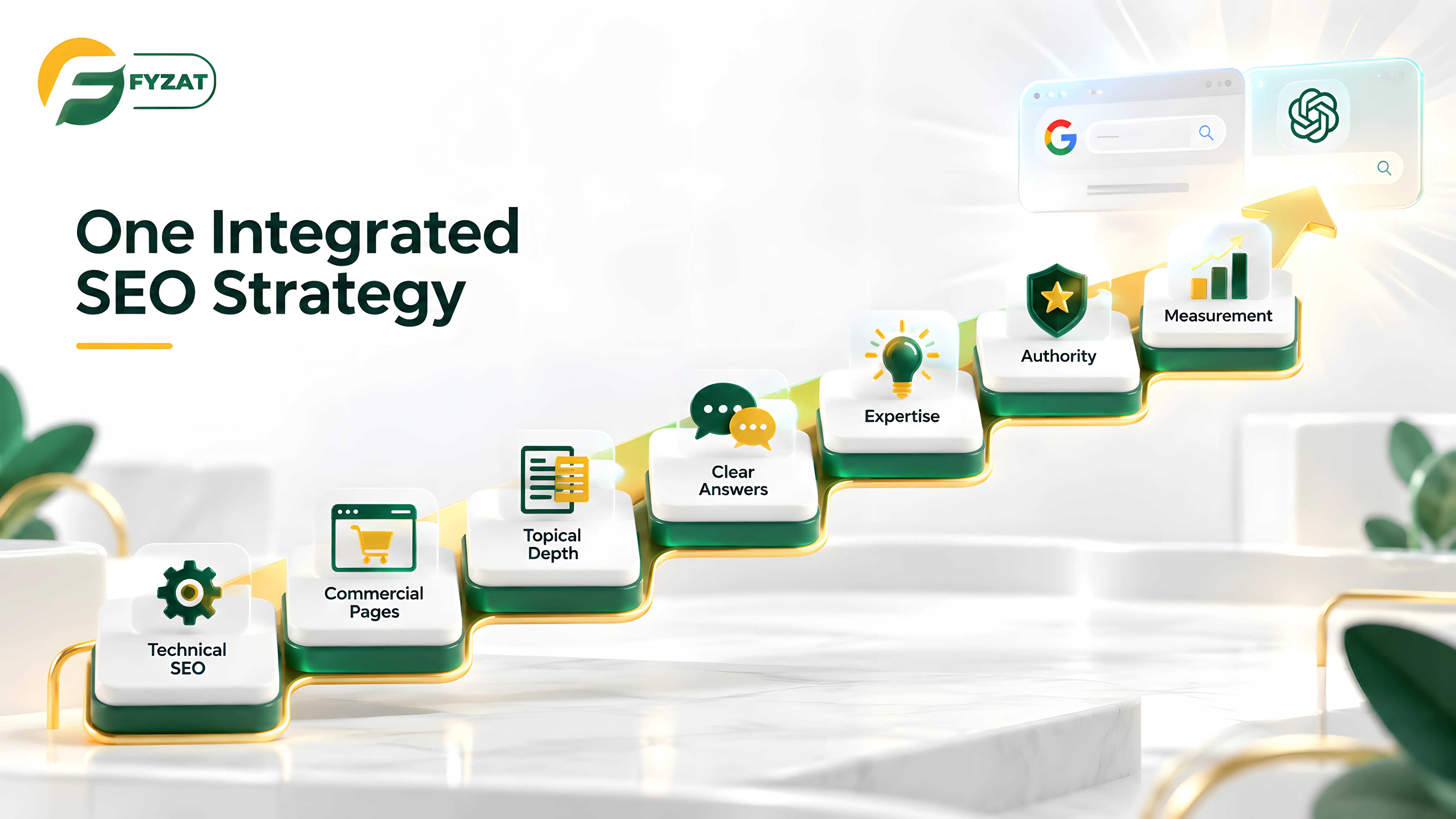
One Integrated SEO Strategy for 2026
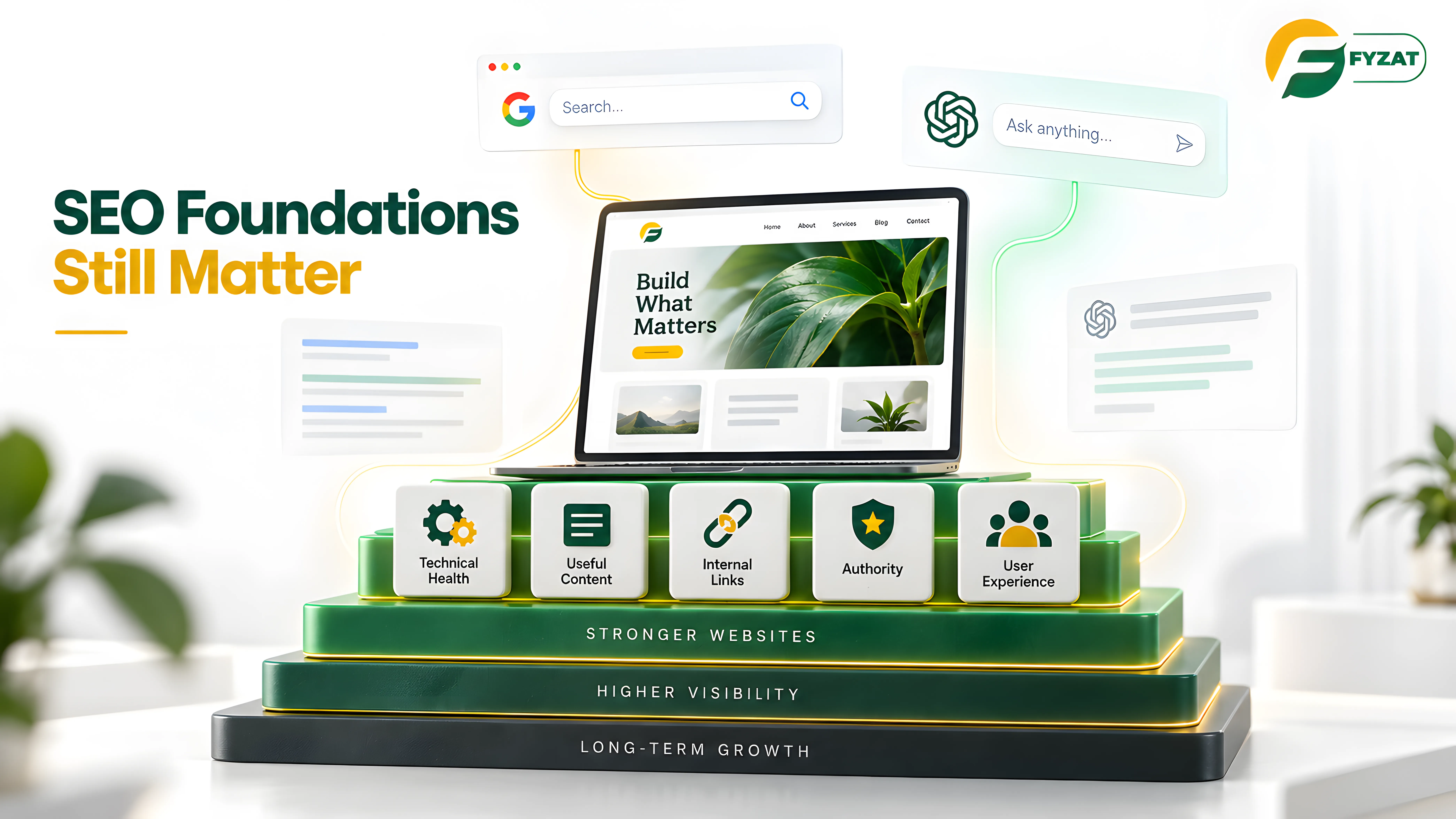
Technical health, useful content, internal links, authority, and user experience remain essential for modern search visibility

Most businesses should use an integrated strategy.

Traditional SEO creates the foundation. AI SEO adapts that foundation to changes in search behaviour and search experiences.

Here is a practical seven-step approach.

Step 1: Fix the SEO Foundations

Review crawlability, indexing, site structure, internal links, mobile usability, performance, duplicate content, redirects, canonical tags, and JavaScript problems.

Step 2: Improve Commercial Pages

Create useful service, product, category, and location pages based on genuine customer needs. Each page should explain the offer clearly and guide the visitor towards a suitable next step.

Step 3: Build Topical Depth

Create connected resources around the questions, problems, comparisons, and decisions customers face. Publish because the content is useful, not simply to meet a quota.

Step 4: Make Important Answers Easy to Find

Use descriptive headings and give direct answers where appropriate. Add supporting detail, evidence, and examples after the main answer.

Step 5: Show Real Expertise

Use named authors, first-hand knowledge, original examples, case studies, research, evidence, and practical experience. Do not make claims that the business cannot support.

Step 6: Build Genuine Authority

Earn relevant links, reviews, mentions, citations, partnerships, and industry recognition. Avoid buying low-quality links or creating false mentions.

Step 7: Measure Business Results

Track the complete journey where possible:

Visibility, impressions, clicks, engagement, enquiries, leads, sales, and revenue.

Google Search Console now includes a Generative AI performance report for supported features such as AI Overviews and AI Mode. For eligible properties, it reports impressions and allows analysis by pages, countries, and dates. Google is rolling out access gradually, so the report may not yet appear for every website.

Rankings and AI visibility can be useful indicators, but the final goal should be meaningful business results.

Traditional SEO Is Not Dead

AI-powered search is changing how people discover and compare information. It is not removing the need for good SEO.

Technical accessibility, content quality, search intent, internal linking, authority, and user experience still matter. What is changing is the search journey around these foundations.

People can ask longer questions, continue a conversation, compare several options, search with images, and move between traditional results and AI-generated answers.

The strongest approach in 2026 is therefore:

Strong SEO foundations plus original expertise, useful content, technical accessibility, and adaptation to AI-powered discovery.

AI SEO vs Traditional SEO: Final Words

AI SEO vs Traditional SEO is not about choosing one strategy over another. Businesses need strong SEO foundations supported by useful content, technical accessibility, real expertise, and preparation for AI-powered search.

Fyzat helps businesses improve traditional SEO while adapting their websites and content for evolving search experiences.

Ready to strengthen your visibility across traditional and AI-powered search?

Frequently Asked Questions

What is the difference between AI SEO and traditional SEO?

Traditional SEO improves a website’s visibility in organic search results. AI SEO extends these practices to account for generative and conversational search experiences. Both depend on useful content, technical accessibility, search intent, authority, internal linking, and user experience.

No. Google states that its established SEO best practices remain relevant to AI Overviews and AI Mode. Businesses still need crawlable pages, helpful content, clear website structure, and trustworthy information.

No. AI SEO is better understood as an evolution of SEO. It helps businesses adapt traditional SEO foundations to AI-powered and conversational search journeys.

Generative Engine Optimisation, or GEO, is an industry term for work intended to improve visibility in generative AI experiences. Answer Engine Optimisation, or AEO, focuses on presenting clear and accurate answers in answer-focused search experiences. Both can support a wider SEO strategy, but neither replaces SEO fundamentals.

Yes. Keyword research helps businesses understand audience demand and the language customers use. Modern research should also consider search intent, related questions, entities, customer journeys, and wider topical context.

Relevant backlinks and genuine mentions can support trust and authority. Businesses should earn them through useful content, expertise, digital PR, partnerships, and other legitimate methods rather than relying on low-quality link schemes.

Structured data can help Google understand specific information and make pages eligible for supported rich results. However, there is no special structured data that guarantees inclusion in AI Overviews or AI Mode.

Start with strong SEO foundations. Make sure important pages can be indexed, answer customer questions clearly, add first-hand value, keep business information accurate, build genuine authority, and measure enquiries and sales as well as search visibility.

On this page

Is Your Website Ready for AI-Powered Search?

Get a professional SEO audit to uncover technical issues, content gaps, and opportunities across traditional and AI-powered search.

Swapna Begum

WRITTEN BY

Swapna Begum

Author at Fyzat. Stay tuned for more informative articles and updates from this author.

Scroll to Top