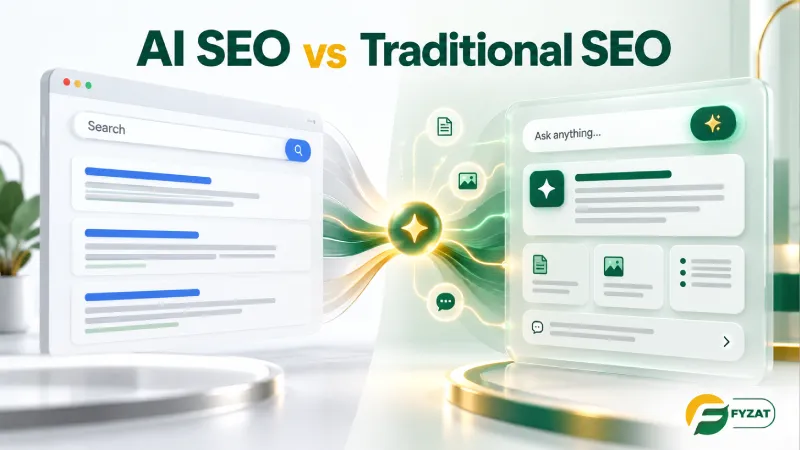

Businesses have used traditional SEO for years to improve their Google rankings and attract website visitors. Now, AI-powered search is creating new ways for people to find information and businesses. So, AI SEO vs Traditional SEO: what is the difference, and which approach does your business need in 2026?
In this guide, we compare both approaches and explain how businesses can use them together.
What Is Traditional SEO?
Traditional SEO is the process of improving a website so that it can appear higher in Google’s normal search results. When people search for products, services, or information, they usually receive a list of websites. SEO helps businesses improve their chances of appearing in these results. Traditional SEO includes several important activities:
- Keyword Research: Finding the words and phrases people use when searching for products, services, and information.
- On-Page SEO: Improving website titles, headings, written content, images, and links between pages.
- Technical SEO: Making sure search engines can access and understand important website pages.
- Content SEO: Writing useful website pages and articles that answer people’s questions.
- Off-Page SEO: Building your website’s reputation through relevant links, business mentions, and other online activities.
- Local SEO: Helping businesses appear in searches related to their location and the services they provide.
Fyzat provides organic search engine optimization services to help businesses improve their website visibility and reach people through Google Search.
What Is AI SEO?
AI SEO is the process of improving a website’s content and overall quality to support visibility in AI-powered search experiences. Traditional search usually shows a list of website links. AI-powered search can also provide written answers, combine information from different sources, and show links to supporting websites. AI SEO focuses on making website information clear, useful, and easy to understand. It covers search experiences such as:
- Google AI Overviews
- Google AI Mode
- AI-powered search results
- Conversational search
- Generative AI search experiences
AI SEO does not replace traditional SEO. It builds on the same basic practices while considering how people search for and receive information through AI tools.
AI SEO vs Traditional SEO: What’s the Difference?
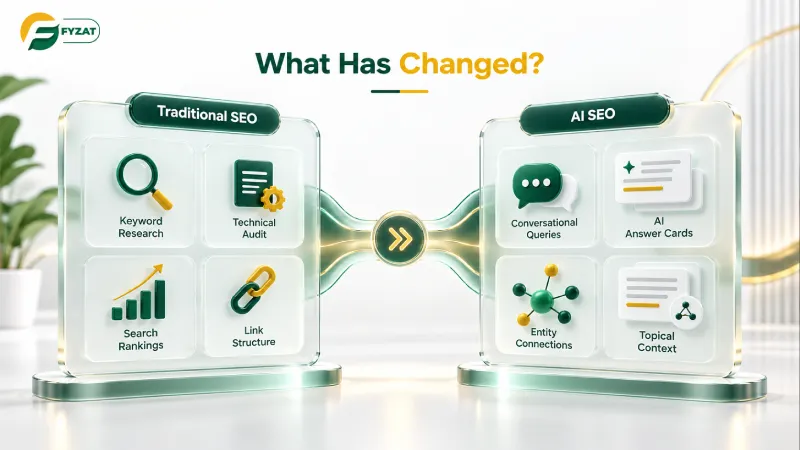
AI SEO and traditional SEO have the same main purpose: helping people find useful information online. However, they have some differences in how content is presented, how people search, and how businesses measure their visibility. Here is a simple comparison:
| Area | Traditional SEO | AI SEO |
|---|---|---|
| Main Focus | Visibility in normal search results | Visibility in AI-powered search |
| Search Behaviour | Often shorter searches | Often longer and conversational questions |
| Content | Answers search queries | Provides clear answers with wider topic coverage |
| Keywords | Focuses on relevant search terms | Uses keywords with related topics and questions |
| Search Results | Mainly website links | AI answers with supporting website links |
| Content Structure | Clear headings and useful sections | Clear headings and direct answers |
| Technical SEO | Important | Still important |
| Internal Links | Connect related website pages | Help visitors and search engines find related content |
| Backlinks | Help build website reputation | Remain part of a wider SEO strategy |
| Original Content | Helps make pages more useful | Helps provide information that stands out |
| Structured Data | Helps describe website information | Useful when relevant, but not a special AI ranking shortcut |
| Measurement | Rankings, clicks, traffic, and enquiries | Search visibility, available AI reports, clicks, and business results |
The main difference is how people find and receive information. The basic work needed to maintain a useful website remains largely the same.
What Still Matters in Both AI SEO and Traditional SEO?
Businesses do not need to stop their existing SEO activities to prepare for AI-powered search. Many important SEO practices still support both traditional and AI search visibility. Here are the areas that businesses should continue to work on.
1. Helpful Content
Your website should provide useful information that answers people’s questions and helps them understand your products or services.
2. Search Intent
Understand what people want when they search. Your website pages should provide information that matches their needs.
3. Website Accessibility
Google needs to access your important website pages before they can appear in search results.
4. Clear Website Structure
Organize your website so visitors can find important information without difficulty.
5. Internal Linking
Connect related pages so visitors can move between different sections of your website.
6. Good Website Experience
Your website should work properly on mobile phones and computers. Pages should load well, and visitors should be able to find information easily.
7. Trust and Experience
Show your business information, experience, customer reviews, and relevant work to help visitors understand your company.
8. Original Content
Publish useful information that adds something valuable instead of repeating the same information found on other websites.
What Should Businesses Add for AI Search in 2026?
Traditional SEO provides a strong starting point. However, businesses should also consider how their content answers longer questions and supports more detailed searches. Here are some important areas to focus on.
1. Answer Important Questions Directly
People often use AI-powered search to ask detailed questions. Your website should provide clear answers to the questions related to your business. Start each important section with a direct answer. Then provide additional information to explain the subject. Avoid long introductions that make readers wait for the information they need.
2. Cover the Full Customer Journey
People do not always make a decision after their first search. They may need information about a service, its benefits, costs, and available options. Your website should have useful pages for different stages of the buying process. This can include service pages, helpful articles, pricing information, and frequently asked questions.
3. Add Real Experience and Useful Information
Content should offer more than general information that appears on every other website. Include information based on your actual work, knowledge, and experience. Keep your business details accurate and make sure your content provides real value.
4. Make Your Brand Easy to Understand
Your website should clearly explain your business, services, experience, and contact information. Keep your company details consistent across your website and other online platforms.
5. Keep Your Website Information Updated
Old or incorrect information can confuse visitors and make your website less useful. Review important pages regularly. Update outdated information, replace broken links, and make sure your service details are correct.
Which SEO Strategy Should Your Business Use?
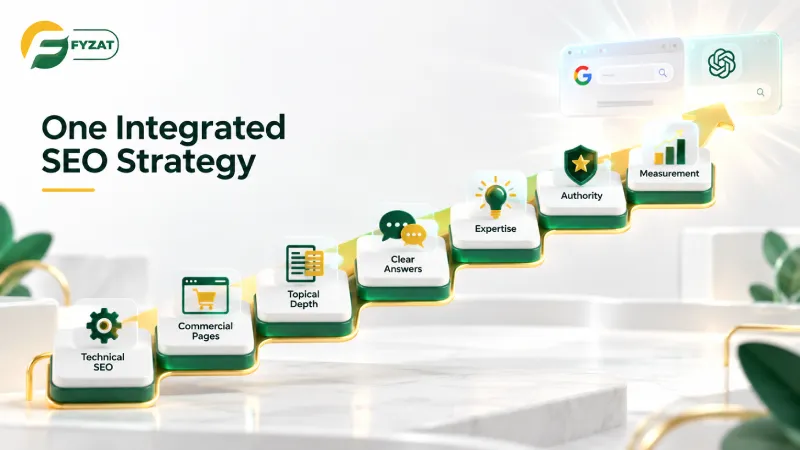
For most businesses, choosing between traditional SEO and AI SEO is not the right approach. You need a plan that supports both. Traditional SEO builds the foundation, while AI SEO considers newer ways people search for and receive information. A practical SEO strategy for 2026 should include the following steps.
Step 1: Improve Your Existing SEO
Start by checking your website’s current condition. Make sure important pages are available in Google Search and that visitors can use your website without difficulty.
Step 2: Improve Important Business Pages
Your service, product, and category pages should clearly explain what your business offers. Use helpful headings, clear descriptions, and suitable contact options.
Step 3: Build Related Website Content
Publish useful articles around the subjects your customers care about. Connect related articles and service pages through natural internal links.
Step 4: Make Your Content Easy to Understand
Use simple language, clear headings, short paragraphs, and direct answers. Organize each page so readers can find the information they need.
Step 5: Show Your Business Experience
Add genuine customer feedback, company information, completed work, and other details that help visitors trust your business.
Step 6: Build Your Online Reputation
Maintain your business profiles, share useful information, and build relationships with relevant websites.
Step 7: Check Your Results
Monitor your search visibility, website visits, customer enquiries, and sales. Use the information to decide which pages need more attention.
How Do AI SEO, GEO, and AEO Differ?
When discussing AI-powered search, you may also come across two other terms: GEO and AEO. Although these terms are related, they are not exactly the same.
AI SEO
AI SEO is a broad term for improving website visibility across traditional and AI-powered search experiences.
GEO (Generative Engine Optimization)
GEO refers to improving content so it has a better chance of being used or mentioned in answers from generative AI systems.
AEO (Answer Engine Optimization)
AEO focuses on making website content clear and useful for systems that provide direct answers to people’s questions. These terms are often used together in digital marketing.
However, they are industry terms rather than separate Google requirements. Businesses should not treat GEO or AEO as replacements for traditional SEO. Good website content, clear information, and strong SEO practices remain important.
Final Thoughts
The discussion around AI SEO vs Traditional SEO does not mean businesses need to choose one over the other. Traditional SEO remains the foundation of a strong online presence. AI SEO adds another area to consider as people use new ways to search for information. Businesses should focus on useful content, good website quality, clear information, and a strong online reputation.
At Fyzat, we help businesses improve their online presence through SEO, content writing, and website development. If you want to prepare your website for changing search habits, contact the Fyzat team to discuss your business goals.
FAQs
Traditional SEO focuses on improving website visibility in normal search results. AI SEO extends these practices to support visibility in AI-powered search experiences, where people receive answers and links to supporting websites.
No. Traditional SEO remains important. Google confirms that its usual SEO best practices still apply to AI Overviews and AI Mode.
No. AI SEO is better understood as an extension of traditional SEO. Businesses still need useful content, good website quality, and a strong online reputation.
GEO stands for Generative Engine Optimization. It refers to improving content to support its visibility in answers produced by generative AI systems.
AEO stands for Answer Engine Optimization. It focuses on making website content clear and useful so that it can answer people's questions directly.
Yes. Keyword research helps businesses understand what people search for. It should also consider related questions, search intent, and the wider subject.
Relevant links and genuine mentions can support a website's overall reputation. Businesses should focus on earning useful links rather than buying large numbers of low-quality links.
Structured data helps search engines understand certain website information. However, there is no special structured data that guarantees inclusion in Google AI Mode or AI Overviews.
Small businesses should first establish good SEO foundations. They can then improve their content and website to support newer search experiences.
Focus on useful content, good website quality, clear business information, related internal links, and a strong online reputation. Keep reviewing your website and updating information when needed.